


Transition planning can make or break a student’s post-secondary success, yet many IEP teams struggle to create truly effective roadmaps. This webinar cuts through the confusion with practical, research-backed strategies for building transition plans that actually work for students with intellectual disabilities, autism, and other developmental disabilities. Dr. Deidre Gilley walks you through the critical components of coordinated transition planning, from early IEP development through graduation and beyond, showing you how student-centered approaches lead to meaningful outcomes in employment, independent living, and community participation.
What You Get
You’re not just getting random handouts. These downloads are designed to be useful the moment you open them. Here’s what’s included:
All 2 files are free to download, easy to print, and yours to keep and use immediately!
What You’ll Learn
These downloads will provide:
- Essential transition planning components that transform generic IEPs into actionable post-secondary roadmaps
- Evidence-based strategies for coordinating services across schools, families, and community agencies
- Student-centered planning techniques that elevate student voice and self-determination in the transition process
- Practical tools and frameworks for assessing transition readiness and tracking progress toward post-secondary goals
- Real-world solutions to common barriers in transition planning, including limited resources and fragmented service systems
- Implementation guidance for creating sustainable transition programs that support long-term student success
About Dr. Deidre Gilley
Dr. Deidre Gilley is an Assistant Professor of Special Education in Baylor University’s Department of Educational Psychology and Affiliate Faculty of the Baylor Center for Disability and Flourishing. Her research focuses on transition planning, employment outcomes, and postsecondary education for individuals with intellectual and developmental disabilities. Dr. Gilley’s work emphasizes evidence-based practices that promote self-determination, competitive integrated employment, and inclusive higher education opportunities. She actively collaborates with school districts, families, and community partners to strengthen transition services and has published extensively on effective transition planning strategies. Before joining Baylor’s faculty, Dr. Gilley worked directly with students with disabilities in K-12 and post-secondary settings, bringing practical classroom experience to her research and teaching. She also directed a transition program for young adults with IDD. Her commitment to improving outcomes for individuals with IDD drives her work in preparing future special educators and advancing the field of transition services.
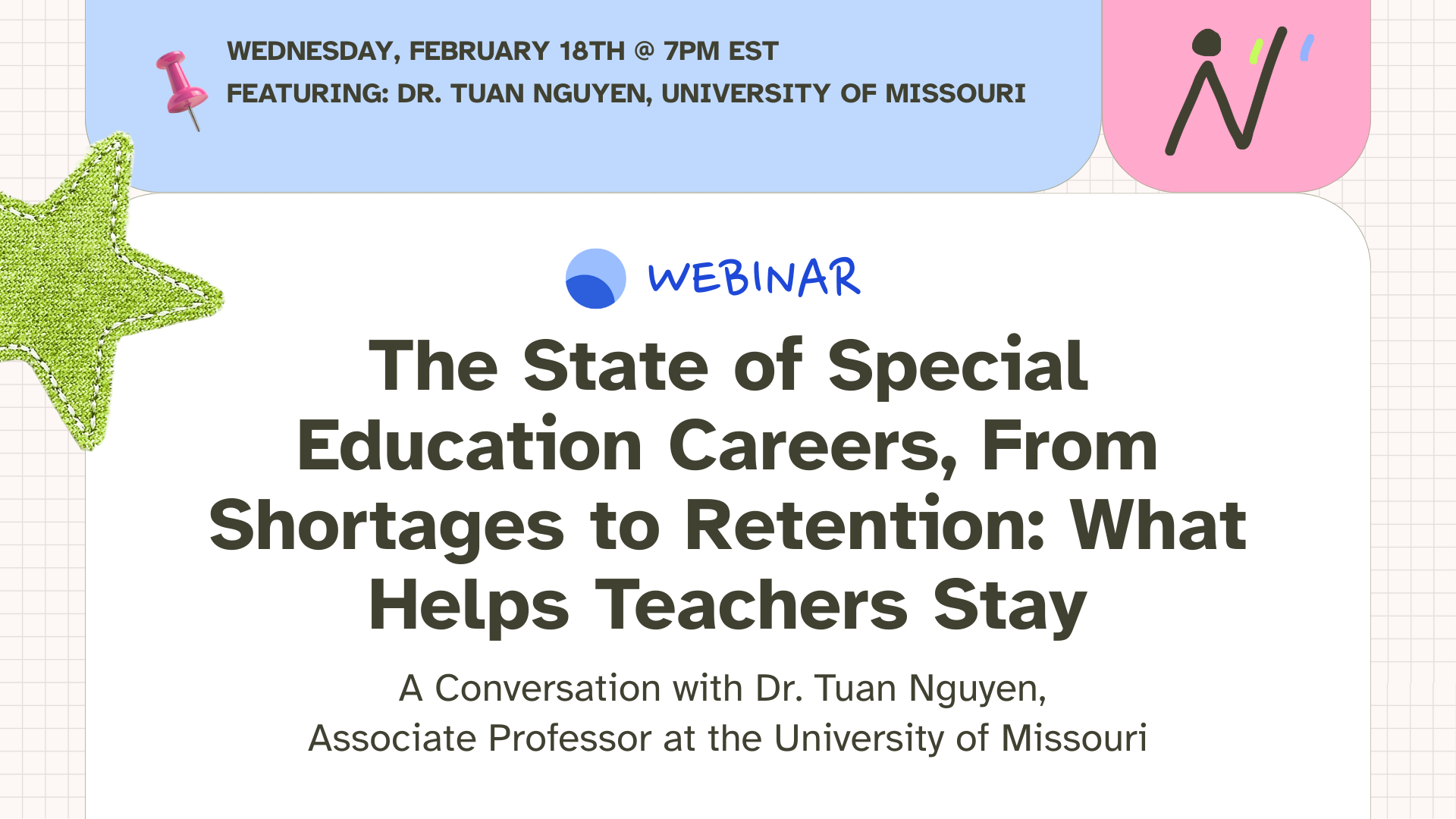
The special education workforce is under increasing strain, yet much of the conversation around teacher shortages misses what’s actually happening on the ground. This webinar features Dr. Tuan Nguyen, Associate Professor at the University of Missouri and creator of TeacherShortages.com, for a comprehensive, data-driven analysis of special education employment in the United States.
What You Get
You’re not just getting random handouts. These downloads are designed to be useful the moment you open them. Here’s what’s included:
All 3 files are free to download, easy to print, and don’t take long to go through. You can start using them the same day you grab them.
What You’ll Learn
These downloads will help you:
-
Understand the Complete Employment Landscape: Current hiring trends, vacancy patterns, and workforce mobility—including 56,000+ vacant positions and 350,000 underqualified positions nationwide.
-
Examine How Teachers Enter and Exit: How preparation pathways and training quality influence who enters special education classrooms and who stays.
-
Identify Why Shortages Persist Despite Constant Hiring: The difference between stability and churn, and why districts struggle even as they fill positions.
-
Explore State and Regional Variations: How retention differs across contexts, including emerging trends from alternative and for-profit training pipelines in states like Texas.
-
See What’s Not Working: Which common retention strategies don’t reduce turnover, and why systemic solutions matter more than individual interventions.
-
Discover Evidence-Based Solutions: Interventions making measurable differences—from support structures to professional development to administrative practices.
-
Plan Strategic Next Steps: Actionable workforce data to inform decisions before the critical budget season, whether you’re deciding about next fall or planning hiring strategy.
About Dr. Tuan Nguyen
Dr. Tuan D. Nguyen is an Associate Professor in the Department of Educational Leadership and Policy Analysis at the University of Missouri and a leading national expert on teacher shortages, retention, and workforce trends.
As the creator of TeacherShortages.com, Dr. Nguyen provides the most comprehensive public database tracking teacher vacancies and underqualification across all 50 states. His research estimates over 56,000 vacant teaching positions and 350,000 underqualified positions for the 2025-2026 school year, making critical workforce data transparent for policymakers and school leaders.
Using rigorous quantitative methods and large-scale data analysis, Dr. Nguyen examines what drives teacher attrition and retention, with particular focus on how shortages uniquely impact special education and rural schools. His work identifies evidence-based interventions that actually work to keep educators in the classroom.
Widely published in high-impact journals like AERA Open, Dr. Nguyen’s research is essential to national conversations on educator preparation, workforce stability, and policies that support the most vulnerable student populations.
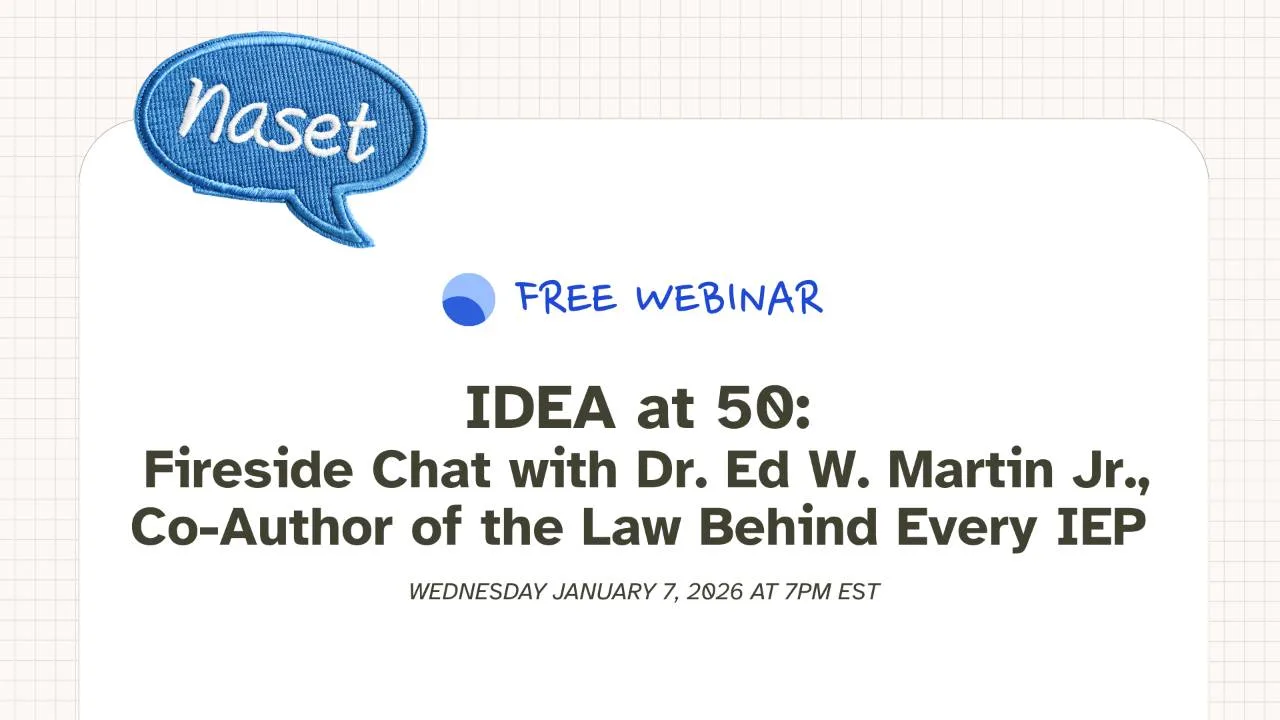
We kicked off our 2026 with a living legend: Dr. Edwin W. Martin Jr., the original architect of the federal legislation that became IDEA.
Dr. Martin is a giant in the field of special education policy. His credentials map the history of the disability rights movement:
- Bipartisan Leader: He served under Presidents Johnson, Nixon, Ford, and Carter, proving that the rights of children transcend politics.
- The Co-Author: As a key congressional staffer and Director of the Bureau of Education for the Handicapped, he was instrumental in drafting P.L. 94-142.
- The First Assistant Secretary: He was appointed by President Carter as the first-ever U.S. Assistant Secretary of Education for Special Education and Rehabilitative Services.
Key Takeaways
IDEA’s “origin story” started earlier than most people realize (mid-1960s) and grew out of grants first.
Dr. Martin described the early push as building federal support for training and state grants (Title 6 of ESEA) before the full national entitlement framework arrived in 1975.
Parents + educators moving policymakers emotionally (not just intellectually) was the real accelerant.
He was blunt that research-only arguments did not move Congress, but stories, visibility, and “humanizing the experience” did.
FAPE was intentionally plain language, then operationalized through the IEP process.
“Free” (no private-school-only pathway), “public” (a public responsibility), and “appropriate” (defined locally through IEP goals, strategies, and measurement). He emphasized the IEP was designed to be simple at its core: set goals, plan strategies, measure progress.
Least Restrictive Environment is not automatically full inclusion.
He repeatedly returned to “where appropriate” and the “continuum of placements,” including the idea that some specialized settings can be affirming and effective when chosen intentionally and reviewed with student voice.
One of his biggest disappointments is the lack of a stronger, scaled research engine behind special education practice.
He framed today’s persistent struggle as less about the law being “broken” and more about the field still needing better evidence about what works, how to replicate it, and how to measure outcomes fairly.
Key Questions Covered In The Webinar
- What problem was IDEA originally designed to solve, and what made it politically possible?
- What did “Free Appropriate Public Education” actually mean in practice, not theory?
- Does Least Restrictive Environment automatically mean inclusion?
- Has compliance culture overtaken educational outcomes?
- What are the greatest positive changes for students over 50 years?
- What are the biggest gaps between IDEA’s intent and today’s reality?
- Why has the federal government never met its funding “promise”?
- Was it a mistake to rely so heavily on parents for enforcement?
- Is IDEA enforcement realistically at risk right now?
- If you could update IDEA today, what would you change?

When neuroscience, education, and policy intersect, the potential to change a student’s trajectory is profound. This webinar, featuring Dr. Nadine Gaab of the Harvard Graduate School of Education and the Gaab Lab. A dedicated advocate for translating research into practice, Dr. Gaab co-founded EarlyBird Education, a gamified platform for early dyslexia screening, and played a key role in the passage of the Massachusetts dyslexia screening legislation.
Join the webinar here: Pediatric Brain, Learning Disabilities and Screening Tools
What You Get
The slide deck provides a deep, evidence-based look at the developing brain and the shift from a “wait-to-fail” model to one of proactive, preventative education.
Read the latest definition of Dyslexia from the committee Dr. Gaab has been a member of for two years.
Why These Slides Matter
These downloads will allow you to:
- Explore the Neuroscience: Gain a clear understanding of typical and atypical brain development in literacy, moving beyond behavior to understand the neurological underpinnings of reading disabilities.
- Identify Early Pre-Markers: Learn to recognize the specific behavioral and cognitive “red flags” for dyslexia and other language-based learning disabilities in early childhood.
- Evaluate Screening Tools: Discover the latest evidence-based screening tools designed to identify literacy milestones and risks early, including insights into the development of platforms like EarlyBird Education.
- Bridge Research to Practice: Understand how to translate complex lab findings into practical classroom strategies that support a “preventative education” framework.
- Advocate for Change: Leave with the knowledge needed to advocate for better screening policies and early intervention strategies within your district or school.
About Dr. Nadine Gaab
Dr. Nadine Gaab is a Professor of Education at the Harvard Graduate School of Education and Principal Investigator at the Gaab Lab. Her work sits at the intersection of developmental psychology, neuroscience, and educational policy, focusing on language and literacy development from infancy to adolescence. Through longitudinal behavioral and neuroimaging studies at her lab, she investigates the complex factors shaping learning trajectories, emphasizing early identification and “preventative education” for children with learning disabilities.
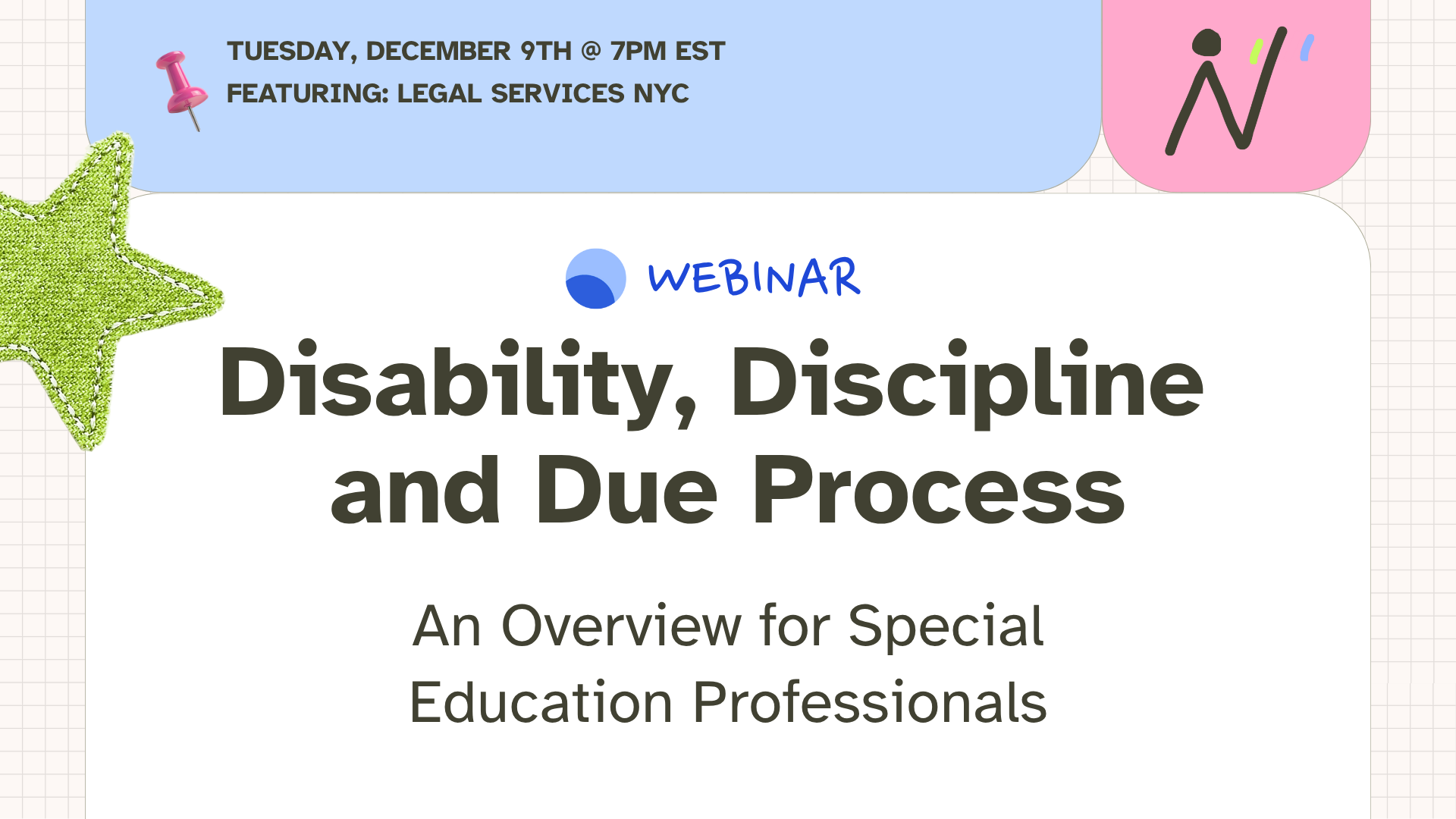
When disability, discipline, and due process intersect, the consequences for students, and for educators, can be profound. This webinar, hosted by Legal Services NYC (LSNYC), takes a clear-eyed, legal-minded look at the rights and responsibilities of schools, teachers, and families when disciplinary actions involve students with disabilities.
Join the webinar here: Disability, Discipline and Due Process
What You Get
The slide deck includes an overview of Disciplinary Due Process, a breakdown of the Manifest Determination Review (MDR), Functional Behavior Assessment (FBA), and Behavior Intervention Plan (BIP).
Why These Slides Matter
These downloads will allow you to:
- Gain a practical understanding of how due process applies when disciplining students with disabilities.
- Learn what schools and educators are legally required to provide, and how to avoid common procedural pitfalls.
- Explore real-world examples of how disciplinary actions can violate IDEA protections and what corrective steps are available.
- Understand how trauma-informed, legally sound practices can prevent escalation and protect student rights.
- Leave with actionable insights to strengthen compliance, advocacy, and equity in school discipline.
About Legal Services NYC (LSNYC)
Legal Services NYC (LSNYC) is one of the nation’s largest civil legal services organizations, dedicated to fighting poverty and advancing racial, social, and economic justice for low-income New Yorkers.
The organization helps individuals and families secure essential needs — including housing, economic stability, family and immigration support, education, and health care — while challenging the systemic barriers that perpetuate inequality.
With deep roots in the communities it serves, LSNYC takes a holistic, trauma-informed approach to advocacy. All services are provided completely free of charge, ensuring that access to justice is never determined by the ability to pay.
Click to Learn More >> : LSNYC Education Practice

Information and events from around the special education community to keep you in the know. Email us with additions and updates.
Resources
Participate in Research
Upcoming Events

This session, focuses on the top 5 critical practices every special educator should master, hosted by the voices behind the hit podcast A Special Education Teacher, Administrator, and Lawyer Walk Into a Bar…. The webinar offers an honest, engaging, and refreshingly practical look at the issues educators face every day with humor and practical takeaways.
Join the webinar here: A Special Education Teacher, Administrator and Lawyer Walk Into a NASET Webinar…
What You Get
The slide deck identifies the 5 areas special educators can master to form the foundation of effective special education practice:
Why These Slides Matter
These downloads will allow you to better understand:
- Behavior is Communication: Every action has a purpose—understanding the “why” behind behavior allows educators to teach replacement skills instead of punishing.
- Discipline as Guidance: Discipline should “course-correct,” not penalize—progressive, handbook-aligned responses teach accountability and self-regulation.
- Compliance is Non-Negotiable: Meeting timelines, providing notice, and following IDEA procedures protect both students’ rights and the school’s legal standing.
- Data Drives Decisions: Objective, measurable data—rather than opinions—ensures instructional quality, documents progress, and defends program integrity.
- Partnerships with Parents: Long-term, transparent collaboration with families builds trust, prevents conflict, and keeps the student’s needs central.
About Robin Fabiano, Abigail Hanscom, and Angela Smagula
Robin Fabiano, Abigail Hanscom, and Angela Smagula are the dynamic trio behind the podcast A Special Education Teacher, Administrator, and Lawyer Walk Into a Bar…, where they tackle the most pressing and perplexing issues in special education with equal parts insight and humor.
Together, they bring decades of experience across education, leadership, and law:
Robin Fabiano is a special education teacher and building base student services administrator known for her practical strategies and commitment to inclusive education.
Abigail Hanscom serves as a district level student services administrator, bridging policy and practice to ensure students and teachers thrive.
Angela Smagula, a founding partner at Kahn & Smagula, specializing in education law, brings deep legal expertise to help educators and families understand their rights and responsibilities.
Listen to their podcast
The Special Education Landscape is Shifting – We’ll Help You Find Clarity
NASET understands how unsettling this uncertainty can be. We have spent 21 years helping teachers and administrators stay compliant through every shift in policy. Given the breadth of changes over the last few weeks, we’re offering this free webinar to provide clarity, context, and a space to ask the questions that matter most.
Whether you’re a teacher, parent, administrator, or advocate, this completely free session is designed to help you understand how current developments may impact IEPs, services, compliance, and—most importantly—your students.
Read about the webinar here: Special Education Landscape Briefing
What You Get
The slides will offer an overview and guidance on the special education landscape today:
The slides are free to download, easy to print, and don’t take long to go through.
Dr. Osborne shared his Substack with us: https://substack.com/@allanosborne?
Additionally, during the webinar Dr. Russo shared the following links:
- https://dayton247now.com/news/local/education-experts-react-to-us-dept-of-education-layoffs
- https://www.diigo.com/item/pdf/5q791/ew13
- https://www.daytondailynews.com/ideas-voices/voices-president-trump-and-the-dept-of-education-mend-it-dont-end-it/56R2Q6SEKNDA5BB6Y5KKTLLSXE/
- https://www.youtube.com/watch?v=zsn42ET_psQ
The views expressed in the links above reflect those of Dr. Russo, not NASET.
About Dr. Allan G. Osborne, Jr. and Dr. Charles J. Russo, J.D., Ed.D.
Dr. Allan G. Osborne, Jr.
Former Principal, Special Education Administrator, and National Lecturer
Dr. Osborne is the former principal of the Snug Harbor Community School in Quincy, Massachusetts. A longtime special education administrator and advocate, he has co-authored multiple books on school law and disability rights, including Special Education and the Law. Known for translating complex legal frameworks into clear, actionable strategies, Dr. Osborne brings both legal knowledge and frontline school experience to this conversation.
Dr. Charles J. Russo, J.D., Ed.D.
Professor of Law, University of Dayton | Director, Ph.D. Program in Educational Leadership
Dr. Russo is an internationally recognized expert in education law. He has authored or co-authored over 300 publications and served as president of the Education Law Association. As a professor of law and director of the Ph.D. in Educational Leadership at the University of Dayton, he trains future education leaders in navigating legal compliance, policy, and ethical decision-making. His insight bridges national policy with everyday application.
Reading difficulties, especially dyslexia, impact millions of students nationwide. Understanding the latest research and applying practical strategies equips educators to provide targeted support for struggling readers.
Join the webinar here: Dyslexia and the Science of Reading
What You Get
You’re not just getting random handouts. These downloads are designed to be useful the moment you open them. Here’s what’s included:
All 4 files are free to download, easy to print, and don’t take long to go through. You can start using them the same day you grab them.
Why These Dyslexia Freebies Matter
These downloads will help you:
- Understand how recent research can shape classroom practice and support student success
- Gain clarity on the nature of dyslexia and how it affects reading development
- Learn evidence-based approaches to assessment and intervention
- Explore strategies to strengthen phonemic awareness and word recognition
About Dr. David A. Kilpatrick
Dr. David A. Kilpatrick is a nationally recognized expert in reading and dyslexia. A professor of psychology for over 25 years at the State University of New York College at Cortland, he has taught courses in learning disabilities and educational psychology while also serving as a school psychologist in central New York.
He is the author of Equipped for Reading Success and co-editor of Essentials of Assessing, Preventing, and Overcoming Reading Difficulties. His research has advanced the field’s understanding of phonemic proficiency, word recognition, and intervention methods. Known for bridging science and practice, Dr. Kilpatrick’s work empowers educators with evidence-based strategies to support struggling readers.
More info: www.equippedforreadingsuccess.com
Every month, our experts go live to answer real questions from the special education community. No question is too big or small – we’re here to share knowledge and expertise with the special education professionals who need it most. We accept anonymous questions
We’re hosting an open session to share the experience with non-members on March 24th at 4pm EST. We invite you to REGISTER and submit your questions below and consider becoming a member today!
Our expert this month is Dr. Mary L. Donaldson, an experienced educational leader with more than 40 years of service in public, charter, and higher education systems across Alaska, Wisconsin, and Minnesota. She currently serves as the Special Education Director for Nome Public Schools, where she leads districtwide special education programming, staff development, and federal grant implementation while supporting students in a high-needs district. Dr. Donaldson has held leadership roles as a superintendent, principal, university program director, and adjunct faculty member, and has extensive experience developing innovative literacy, inclusion, and intensive-needs programs for diverse student populations. She is recognized for building strong school–community partnerships, improving student achievement, and developing culturally responsive programs. Dr. Donaldson holds a Doctorate in Educational Administration and is licensed as a K–12 Principal/Superintendent and Special Education Director in multiple states.
Disclaimer: Expert responses are for informational purposes only and do not constitute legal advice. Always consult your state, district, and school policies before taking action.
At NASET, we recognize that effective special education teaching is grounded in both knowledge and connection. The books for special education teachers and journals listed here have been carefully selected for their practical value and research-based insights.
As a new teacher, you can find clear guidance, while experienced educators can refine their practice. These resources support you in fostering inclusive, equitable, and high-impact learning environments.
The Best Books for Special Education Teachers to Read
Finding the right resources can make a huge difference in your teaching. There are many books for special education teachers to read, but not all of them are practical or easy to apply.
In this section, we’ve pulled together the ones that really add value. Titles that give you strategies, clarity, and ideas you can actually use in your classroom.

Foundational & Legal Guides
Before you get into the classroom strategies, it helps to have a solid base. Some of the best books for special education teachers focus on the laws, policies, and history that shape the field.
These guides explain things like IDEA, Section 504, and inclusion rights in a way that’s clear and useful, so you feel confident navigating the rules that affect your students every day.
- The Complete Guide to Special Education – Linda Wilmshurst & Alan Brue
- A comprehensive handbook covering special education laws, assessments, and collaboration with families. Offers clear explanations and practical tools to ensure educators deliver legally compliant and student-centered services.
- The Special Educator’s Survival Guide – Roger Pierangelo
- A practical reference for daily challenges—covering IEP development, student behavior management, and compliance issues. Designed to help both new and experienced teachers stay organized, confident, and effective.
- Special Education Law – Peter W. D. Wright & Pamela Darr Wright
- Breaks down IDEA, Section 504, and related legal frameworks in plain language. Equips teachers to advocate effectively and safeguard student rights.
Classroom Practice & Differentiation
Teaching isn’t one-size-fits-all. That’s especially true in special education. Good books for special education teachers give you tested strategies for adapting lessons, handling classroom challenges, and keeping students engaged no matter their learning style.
In this section, we highlight the resources that make your teaching smoother and more effective, while also helping you save time and energy.
- Inclusive Classroom: Strategies for Effective Differentiated Instruction – Margo Mastropieri & Thomas Scruggs
- An evidence-based guide to Universal Design for Learning, MTSS, and adaptive instructional methods. Provides ready-to-use strategies for meeting the needs of diverse learners in inclusive environments.
- Teaching Students with Special Needs in Inclusive Settings – Tom Smith, Edward Polloway, James Patton & Carol Dowdy
- Focuses on collaborative teaching practices that bridge general and special education. Offers research-backed techniques for ensuring all students participate fully in classroom learning.
- Lost at School – Ross W. Greene
- Introduces a collaborative problem-solving approach to address challenging behaviors. Shifts the focus from discipline to understanding, building stronger relationships and better outcomes.
- How to Reach and Teach Children with ADD/ADHD – Sandra F. Rief
- Packed with strategies for organization, attention, and behavior support. Helps teachers create structured, supportive environments where students with ADHD can succeed.

Specialized Needs & Advocacy
Every student has their own story, and sometimes that means unique challenges. The best books for special education teachers go beyond general advice and show you how to support children with autism, ADHD, dyslexia, and other specific needs.
They also help you build advocacy skills so you can stand up for your students and work closely with parents and school staff to create the best outcomes.
- You’re Going to Love This Kid! – Paula Kluth
- A compassionate, strengths-based guide to teaching students with autism in inclusive classrooms. Encourages educators to embrace individuality while fostering belonging.
- Thinking in Pictures – Temple Grandin
- Offers first-person insight into the autistic experience, revealing how sensory processing shapes learning. Inspires empathy and informed teaching practices.
- Differentiation and the Brain – David Sousa & Carol Ann Tomlinson
- Connects neuroscience research with classroom differentiation techniques. Gives teachers the science and strategies to design learning experiences that work for all students.
- Visual Supports for People with Autism – Marlene J. Cohen & Peter F. Gerhardt
- Explains how to design and implement visual schedules, cues, and prompts to promote independence. Ideal for enhancing understanding and reducing anxiety in autistic learners.
Assessment, IEPs & RTI/MTSS Tools
Evaluating progress and setting goals can feel complicated without the right resources. That’s where good books for special education teachers come in.
This section covers guides that break down IEP writing, explain RTI and MTSS step by step, and give you tools to track growth without drowning in paperwork. These resources are especially helpful if you want a clear, structured approach to student support.
- RTI: A Practitioner’s Guide to Implementing Response to Intervention – Daryl F. Mellard & Evelyn Johnson
- Step-by-step guidance for developing tiered intervention systems. Covers progress monitoring, data analysis, and team collaboration.
- The Special Education Teacher’s Guide to Assessment – Amanda B. Guerriero, Laura M. Houser & David A. Bernhardt
- Provides a clear overview of assessment types and their role in instructional planning. Supports data-driven decisions and effective IEP development.

Inclusion, Equity & Leadership
Inclusive teaching goes beyond lesson plans. It’s about creating a fair and supportive school culture. Some of the best books for special education teachers look at equity, diversity, and leadership, showing you how to champion inclusion not just in your classroom but across your school community.
These guides give you the bigger picture and the practical steps to lead change in a positive way.
- The Collaborative IEP – Anne Beninghof
- Offers strategies for building IEPs through true collaboration with students, families, and colleagues. Encourages a team-centered approach that leads to stronger, more personalized plans.
- All Means All – Heather Friziellie, Julie Schmidt & Jeanne Spiller
- Promotes a vision of equity where every learner is a general education student first. Provides leadership strategies for creating inclusive systems and practices.
- Co-Teaching Evolved – Wendy W. Murawski & Wendy L. Karge
- Presents modern, research-based approaches to co-teaching, integrating technology and inclusive practices. Strengthens partnerships between general and special educators.
- Fearless Classrooms: Building Trust, Resilience, and Psychological Safety – Douglas Reeves
- Shows educators how to create classrooms where students feel safe to take risks and engage fully. Strengthens trust, resilience, and belonging—critical elements for all learners, particularly those with unique needs.
- The Coaching Habit: Say Less, Ask More & Change the Way You Lead Forever – Michael Bungay Stanier
- A book that will take the way you see coaching to the next level. This practical guide distills coaching into seven powerful questions that foster deeper thinking, problem-solving, and self-reflection. Its strategies equip teachers with tools to help students—including those with special needs—open up, take ownership of their learning, and feel supported.

Journals & Research Outlets
Teaching evolves quickly, and staying up to date is important. Journals for special education teachers and professional journals for special education teachers keep you informed about the latest research, teaching methods, and policy changes.
Here, we’ll point to the publications that are actually worth following, so you’re always learning, adapting, and ready to bring new ideas into your work.
- Exceptional Children
- A leading peer-reviewed journal publishing rigorous research on special education practices and policy. https://journals.sagepub.com/home/ecx
- Teaching Exceptional Children
- Focuses on translating research into practical, classroom-ready strategies for educators. https://journals.sagepub.com/home/tcx
- Learning Disability Quarterly
- Publishes studies on assessment, intervention, and policy in the field of learning disabilities. https://journals.sagepub.com/home/ldq
- Intervention in School and Clinic
- Offers applied solutions for educators working with students with academic and behavioral challenges. https://journals.sagepub.com/home/isc
- Teacher Education and Special Education
- Highlights research on educator preparation, professional development, and special education leadership. us.sagepub.com
Share Your Recommendations
This list is a living resource, and we welcome your input. If you have a book or journal that has shaped your work and could benefit fellow special educators, please share your recommendation with us at contactus@naset.org. Together, we can ensure that every teacher has access to the tools they need to help all students thrive.
This comprehensive guide covers special education teacher salary, requirements, certification, and resources across 46 US states and Washington DC.
Special education teacher shortages affect virtually every state, with critical needs reported in 21 states and moderate shortages in most others. Salary ranges vary dramatically from $43,000 in South Dakota to over $90,000 in California and New York urban districts, while certification requirements show both commonalities and significant state-specific variations.
Here are the Key National Trends:
- Critical shortage crisis: 80% of districts report unfilled special education positions
- Federal compliance: No state allows emergency certification for special education due to IDEA requirements
- Salary competition: States increasing compensation to attract qualified teachers
- Alternative pathways: All states offer some form of alternative certification
- Interstate mobility: Growing emphasis on reciprocity agreements
Note: We are actively working to update the content in this list and it currently covers 46 states and Washington DC. Data for Florida, Georgia, North Carolina, Virginia, and South Carolina will be added shortly.
National Salary Rankings (Average Special Education Teacher Salaries)
Let’s start with the big picture. On average, special education teacher salaries jump around a lot depending on where you live. A teacher in New York might pull in nearly double what someone in Mississippi makes.
However, of course, rent and groceries aren’t the same either. Before going through all the states one by one, let’s lay out the national averages so you can see how the numbers stack up before zooming into your state.
Highest Paying States:
- California: $90,530+ (urban districts)
- New York: $71,723 (NYC)
- Utah: $69,161
- New Mexico: $68,440
- Colorado: $68,647
- Connecticut: $68,746
- Hawaii: $66,890 + $10,000 differential
- Nevada: $66,930
- Rhode Island: $66,991
- Washington: $93,450 (Seattle)
Lowest Paying States:
- South Dakota: $43,000-$57,828
- Montana: $52,000-$53,000
- Idaho: $45,000-$65,000
- Maine: $45,110
- West Virginia: $44,500-$55,618
Average Special Education Teacher in the Northeast Region
The Northeast is where you’ll usually find the highest paychecks. New York and New Jersey top the charts, but the cost of living there can wipe out some of that advantage (try finding an affordable apartment in Manhattan. Good luck).
Here below, you’ll get the breakdown for each state so you can see what’s realistic if you’re teaching in this part of the country.

New York State
Workforce Data:
- Total special education teachers: 21,000 statewide (10,000+ in NYC alone)
- Student population: 21% receive special education services
- Shortage status: Critical shortage designated by US Department of Education
- Job growth: 15.33% projected through 2030
Compensation:
- Average salary: $63,837 statewide; $71,723 in NYC
- Starting salary: $68,902-$77,455 (2025 rates)
- Range: $44,646-$119,289
- Benefits: Comprehensive health insurance, commuter benefits, college savings
- Union: United Federation of Teachers (UFT) – 0.85% dues of Step 8B+L20 salary
Certification Requirements:
- Degree: Bachelor’s minimum; master’s preferred (84% hold master’s)
- New certification: Students with Disabilities (All Grades) – established September 2022
- Testing: NYSTCE exams, edTPA performance assessment
- Timeline: Initial → Professional certificate pathway
Continuing Education:
- CTLE requirements: 100 hours per 5-year period
- Renewal: 5-year cycles
Key Resources:
- State department: NYSED Office of Teaching Initiatives
- Certification system: TEACH Account
- NYC recruitment: TeachNYC.net
- Special education data: NYS Special Education
Current Initiatives:
- New Students with Disabilities certification pathway
- Teacher residency programs
- Alternative certification expansion
Pennsylvania
Workforce Data:
- Total special education teachers: 21,000 employed statewide
- Total districts: 788 districts with 108,756 teachers
- Shortage status: Significant shortage, plan to add thousands by 2025
Compensation:
- Average salary: $61,245-$64,358 statewide
- Starting salary: $40,000-$48,000 (Teach for America participants)
- Philadelphia average: $55,364
- Benefits: Pennsylvania Teachers’ Retirement System, health insurance
Certification Requirements:
- Degree: Bachelor’s required; master’s preferred for advancement
- Testing: PECT (Pennsylvania Educator Certification Tests)
- Act 55 of 2024: Eliminates basic skills assessment (effective July 1, 2025)
- Certification levels: Instructional I (initial), Instructional II (permanent)
Key Resources:
- State department: PA Department of Education
- Certification system: TIMS
- Professional development: PaTTAN
- Testing: PECT
Recent Legislation:
- Act 55: Basic skills assessment elimination
- Act 82: Special education certification expansion
New Jersey
Workforce Data:
- Total special education teachers: 15,525 statewide
- Student population: 16.1% have IEPs (above national 13% average)
- Federal rating: “Needs Assistance” for special education services
- Districts: 603 districts with 2,620 public schools
Compensation:
- Average salary: $58,136-$68,481 statewide
- Starting salary: $55,401
- Range: $50,992-$111,110
- Union: New Jersey Education Association (NJEA)
Certification Requirements:
- Degree: Bachelor’s from regionally accredited institution
- Certificate types: CE (eligibility), CEAS (advanced standing), Standard (permanent)
- Testing: Praxis Core, edTPA, subject-specific tests
- Dual requirement: Special education must combine with general education endorsement
Key Resources:
- State department: NJDOE Certification
- Application system: NJEdCert
- Special education office: Office of Special Education Programs
Recent Changes:
- Basic skills requirement eliminated January 1, 2025
- Five-year interstate reciprocity pilot program
Connecticut
Workforce Data:
- Total special education teachers: 5,370 statewide
- Student population: 12.2% receive special education services
- Federal rating: “Meets Requirements” (highest rating)
- Immediate vacancies: 1,300 positions (2023)
Compensation:
- Average salary: $68,746 special education; $81,185 all teachers
- Starting salary: $43,000 (proposed increase to $60,000)
- Range: $40,944-$109,418
- Union: Connecticut Education Association (CEA) – 43,000 members
Certification Requirements:
- Degree: Bachelor’s minimum; state-approved preparation program
- Special education coursework: 36 clock hours required for all teachers
- Testing: Praxis Core or alternatives, subject-specific tests
- Student teaching: 6-12 credit hours
Key Resources:
- State department: CT Department of Education
- Certification: Bureau of Certification
- Professional development: SERC
- Special education: Bureau of Special Education
Recent Funding:
- $150 million additional education funding (2023)
- Bills pending to raise starting salary to $60,000
Massachusetts
Workforce Data:
- Total positions: 900+ in Boston alone; 5,151 statewide
- National ranking: #1 best state to live in (2024), #3 for teacher pay
- Shortage status: Significant shortage across state
Compensation:
- Average salary: $57,647-$66,727 special education; $92,307 all teachers
- Range: $43,690-$76,557
- Benefits: Massachusetts Teachers’ Retirement System, comprehensive health insurance
- Union: Massachusetts Teachers Association (MTA)
Certification Requirements:
- Degree: Bachelor’s from accredited institution
- Testing: MTEL (Massachusetts Test for Educator Licensure)
- Alternative tests: Praxis Core accepted
- License types: Initial, Provisional, Professional
Key Resources:
- State department: Massachusetts DESE
- Licensure system: ELAR
- Special education: Special Education Resources
Average Salary for Special Education Teacher in the Southeast Region
In the Southeast, salaries tend to be lower than the national average. It’s not all bad news though. Living expenses are usually lower too, so your paycheck can stretch a bit further. We’ll cover states like Tennessee, Kentucky, Alabama, and more so you’ve got a clear idea of what the numbers actually look like down here.

Tennessee
Workforce Data:
- Total special education teachers: 7,320 serving 1,791 schools
- Shortage status: 31% of positions vacant (2022-23)
- Student population: 13% have IEPs
- Districts: 140 school districts
Compensation:
- Average salary: $50,000-$65,000
- Starting salary: $42,000-$53,000
- Mid-career: $55,000-$65,000
- Experienced: $60,000-$75,000+
Certification Requirements:
- Degree: Bachelor’s from accredited institution
- Testing: Praxis Subject Tests, Praxis Core, Tennessee Literacy Success Act compliance
- License types: Practitioner (3-year), Professional (after 3+ years)
Key Resources:
- State department: Tennessee Department of Education
- Certification: Office of Educator Licensing
- Special education: Division of Special Education
Current Funding:
- TISA: Tennessee Investment in Student Achievement Act – $9B formula with $6,860 base plus special needs weights
- 2024-25 increase: $261 million budget increase
Kentucky
Workforce Data:
- Shortage status: Special education identified as shortage area 2023-24
- Certification system: Rank-based (III, II, I)
Compensation:
- Average salary: $59,634 (2024)
- Range: $47,014-$78,099
- Starting: $40,000-$50,000
- Rank advancement: Higher education = higher pay
Certification Requirements:
- Degree: Bachelor’s + approved preparation program
- Student teaching: 70 days minimum with 200 clock hours
- Testing: Praxis exams specific to special education area
- Renewal: Every 5 years
Key Resources:
- State board: Kentucky Education Professional Standards Board
- State department: Kentucky Department of Education
- Special education: Office of Special Education and Early Learning
Alabama
Workforce Data:
- Total special education teachers: 600 in secondary special education
- Job growth: 8% expected (2016-2026)
- Shortage status: Critical shortage area
Compensation:
- Average salary: $52,390-$59,264
- Entry level: $35,293-$46,717
- Experienced: $66,651-$94,316
- Certification classes: B, A, AA with corresponding pay scales
Certification Requirements:
- Degree: Bachelor’s from accredited institution
- Testing: Alabama Educator Certification Assessment Program (AECAP), Praxis II
- Background check: Required through ASBI and FBI
Key Resources:
- State department: Alabama Department of Education
- Certification: Online application system
- Background checks: AIM Account, Fieldprint contractor
Mississippi
Workforce Data:
- Total special education teachers: 910 statewide
- Student population: 13% with IEPs (matches national average)
- Federal rating: “Meets Requirements” (highest rating)
- Schools: 1,097 public schools across 152 districts
Compensation:
- Average salary: $47,833 (2025)
- Range: $41,955-$55,571
- MAEP levels: A ($41,500) to AAAA ($45,500) starting minimums
- National Board supplement: $6,000 annually
Certification Requirements:
- Degree: Bachelor’s from accredited institution
- Testing: ACT 21+ OR Praxis CORE, plus Praxis II PLT and subject tests
- Classes: A (initial), AA (master’s), AAA (specialist), AAAA (doctorate)
Key Resources:
- State department: Mississippi Department of Education
- Certification: Office of Educator Licensure
- Special education: Office of Special Education
Current Funding:
- 2024 formula: New Mississippi Student Funding Formula
- Investment: $2.95 billion including $250M additional
West Virginia
Workforce Data:
- Shortage status: Critical shortage area
- Unfilled positions: 1,500 during 2022-23
- Job growth: 3.3% projected (above national average)
Compensation:
- Average salary: $44,500-$55,618
- Range: $28,460-$60,020
- 2020-21 minimums: Bachelor’s $32,057, Master’s $39,266
Certification Requirements:
- Degree: Bachelor’s from accredited institution
- Testing: Praxis I, Praxis II content and professional knowledge
- Types: Initial Professional (3-year), Professional (5-year), Permanent (veterans)
Key Resources:
- State department: West Virginia Department of Education
- Certification: Office of Certification (304) 558-7010
- Alternative programs: TeachWV.com
Arkansas
Workforce Data:
- Student population: 16% served under IDEA
- Job growth: 9% projected (2020-2030)
- Shortage status: Critical shortage area
Compensation:
- Average salary: $64,514 (2024)
- Minimum salary: $50,000 (increased from $36,000 via LEARNS Act)
- Merit pay: Up to $10,000 bonuses for high-performing teachers
- 2024-25 bonuses: $14.24 million to 4,200 teachers
Certification Requirements:
- Degree: Bachelor’s + approved preparation program
- Testing: Praxis Core, Praxis II PLT, subject areas, Foundations of Reading
- License types: Standard (5-year), Provisional (3-year), Lifetime (age 62+)
Key Resources:
- State department: Arkansas Division of Elementary and Secondary Education
- LEARNS Act: Information portal
- Certification: Office of Educator Effectiveness and Licensure
Major Reform:
- LEARNS Act (2023): Comprehensive education reform including merit pay system
Louisiana
Workforce Data:
- Shortage status: NOT reporting special education shortages (2024-25)
- Certification structure: No general special education – must specialize by population
Compensation:
- Average salary: $52,247-$59,967
- Range: $16,247-$118,862
- Starting: $42,988 (2023 bachelor’s degree)
- Special incentives: $1,500 bonuses in some districts
Certification Requirements:
- Degree: Bachelor’s (120 semester hours maximum 2024-25)
- GPA: 2.20 minimum for program entry
- Testing: Praxis I and II exams
- Field experience: 180 hours minimum
Key Resources:
- State department: Louisiana Department of Education
- Certification: TeachLouisiana.net
- Licensing: Office of Educator Licensure
Average Salary of a Special Education Teacher in the Midwest Region
The Midwest is kind of a mixed bag. Some states pay fairly well compared to their cost of living, but others lag behind. If you’ve ever thought about teaching in Ohio, Michigan, or Illinois, this section gives you the salary averages and a look at what’s required to get licensed.

Ohio
Workforce Data:
- Total special education teachers: 18,600+ serving 615 districts
- Student population: 14.8% have IEPs (above national average)
- Federal rating: “Meets Requirements” (highest rating)
- Shortage status: Designated shortage area
Compensation:
- Average salary: $51,577-$58,990
- Starting salary: $38,780-$39,089
- Range: $38,780-$85,050
- Benefits: State Teachers Retirement System (STRSOH)
- Union: Ohio Education Association (91.7% unionization)
Certification Requirements:
- Degree: Bachelor’s from regionally-accredited institution
- Testing: Ohio Assessment for Educators (OAE) content and pedagogy
- Field experience: 100 clock hours minimum
- License progression: Resident Educator (2-year) → Professional (5-year) → Senior Professional → Lead Professional
Key Resources:
- State department: Ohio Department of Education
- Certification: Office of Educator Licensure
- Application system: ODE.CORE (Connected Ohio Records for Educators)
- Professional development: Ohio Center for Autism and Low Incidence
Illinois
Workforce Data:
- Total special education teachers: 23,571 (2020-21)
- Student population: 14.5% have disabilities
- Federal rating: “Needs Assistance”
- Shortage status: Significant shortage
Compensation:
- Average salary: $62,500-$65,971
- Starting salary: $45,820-$48,830
- Range: $32,288-$100,920
- Benefits: Illinois Teachers Retirement System
- Union: Illinois Education Association (96.3% unionization – highest in nation)
Certification Requirements:
- Degree: Bachelor’s minimum
- Testing: Illinois Licensure Testing System (ILTS), edTPA (score 39+)
- License type: Professional Educator License (5-year)
- Renewal: 120 hours professional development
Key Resources:
- State department: Illinois State Board of Education
- Application system: Educator Licensure Information System (ELIS)
- Tuition program: Illinois Special Education Teacher Tuition Waiver (SETTW)
Michigan
Workforce Data:
- Total special education teachers: 13,151 statewide
- Student population: 13.7% have IEPs
- Federal rating: “Needs Assistance”
- Shortage status: Significant shortage
Compensation:
- Average salary: $53,253-$63,700
- Starting salary: $41,369-$43,600
- BLS by level: Secondary $71,930, Middle $70,430, Elementary $67,510
- Union: Michigan Education Association (84.7% unionization)
Certification Requirements:
- Degree: Bachelor’s from regionally-accredited institution
- Testing: Michigan Test for Teacher Certification (MTTC)
- License types: Provisional → Professional Education Certificate → Master Educator License
- Background check: Required plus First Aid/CPR within first year
Key Resources:
- State department: Michigan Department of Education
- Certification system: Michigan Online Educator Certification System (MOECS)
- Application system: Michigan Education Information System (MEIS)
Indiana
Workforce Data:
- Total teachers: 61,000+ statewide
- Student population: 15.8% have IEPs (highest nationally)
- Federal rating: “Needs Assistance”
- Shortage status: Significant shortage
Compensation:
- Average salary: $58,139-$62,089
- Starting salary: $36,980-$47,600
- Range: $36,980-$98,823
- Union: Indiana State Teachers Association (65.4% unionization)
Certification Requirements:
- Degree: Bachelor’s with 3.0 GPA
- Testing: Core Academic Skills Assessment (CASA), Development Assessment, content exams
- License types: Initial Practitioner (2-year) → Proficient Practitioner (5-year) → Accomplished Practitioner
Key Resources:
- State department: Indiana Department of Education
- Application system: Licensing Verification and Information System (LVIS)
- I-SEAL Program: $2.6 million Indiana Special Education Assisted Licensure program
Wisconsin
Workforce Data:
- Total teachers: 62,500 in public schools
- Student population: 14% receive special education services
- Shortage status: Significant shortage
- Union: Wisconsin Education Association (48% unionization – affected by 2011 reforms)
Compensation:
- Average salary: $61,871-$64,680
- Starting salary: $37,765
- Range: $37,765-$100,905
Certification Requirements:
- Degree: Bachelor’s minimum
- Student teaching: 18 weeks minimum
- Testing: Praxis II, Wisconsin Foundations of Reading Test
- License types: Initial Educator (5-year) → Professional Educator (5-year) → Master Educator (10-year)
Key Resources:
- State department: Wisconsin Department of Public Instruction
- Special education: DPI Special Education Team
- University programs: UW-Madison ranked #1 in education graduate programs
Minnesota
Workforce Data:
- Total special education teachers: 7,750
- Student population: 15% have disabilities
- Job growth: 7% projected through 2030
- Districts: 339 independent districts plus charter schools
Compensation:
- Average salary: $61,920-$68,081
- Starting salary: $38,360-$49,000
- Range: Up to $90,290
- Minneapolis: $68,081 average
- Union: Education Minnesota (70,000+ members)
Certification Requirements:
- Degree: Bachelor’s from accredited preparation program
- License: Academic and Behavioral Strategist (ABS)
- Testing: Minnesota NES Essential Academic Skills, MTLE Pedagogy
- Renewal: Every 5 years
Key Resources:
- State department: Minnesota Department of Education
- Certification: Educator Licensing Division
- University programs: University of Minnesota-Twin Cities (top 10 nationally)
Iowa
Workforce Data:
- Total special education teachers: 5,350
- Student population: 13.8% have disabilities
- Job growth: 6.2-6.6% projected through 2032
- Districts: 361 districts, 1,501 public schools
Compensation:
- Average salary: $52,000-$63,000
- Starting salary: $28,909-$44,830
- Master’s bonus: ~$4,000 annually
- Union: Iowa State Education Association
Certification Requirements:
- Degree: Bachelor’s from approved program
- Student teaching: 14 weeks required
- Testing: No longer required since 2022 for approved programs
- License types: Initial (2-year) → Standard (5-year) → Master Educator
Key Resources:
- State department: Iowa Department of Education
- Licensing: Iowa Board of Educational Examiners
- Job portal: Teach Iowa
Missouri
Workforce Data:
- Total special education teachers: 9,000
- Student population: 13.8% have disabilities
- Federal rating: “Meets Requirements” (highest)
- Job growth: 2.6-2.9% projected
Compensation:
- Average salary: ~$52,000
- Benefits: Public School and Education Employee Retirement Systems
- Union: Missouri State Teachers Association, Missouri NEA
Certification Requirements:
- Degree: Bachelor’s with preparation program
- Testing: Missouri General Education Assessment (MoGEA), Missouri Educator Gateway Assessments
- GPA: 2.75 overall, 3.0 in professional education
- License types: Initial Professional (4-year) → Career Continuous Professional
Key Resources:
- State department: Missouri Department of Elementary & Secondary Education
- Certification: DESE Educator Certification
- Job boards: MO Teaching Jobs, MOREAP
Kansas
Workforce Data:
- Total special education teachers: 4,000+
- Student population: 14% have disabilities
- Shortage status: Critical shortages in adaptive PE, deaf/hearing impaired
- All areas: Declared critical shortage
Compensation:
- Average salary: $54,049-$91,082
- Starting salary: $38,649-$52,000
- Experienced: Up to $75,586
- Recent improvement: 9.5% increase (2018-2020)
- Union: Kansas National Education Association
Certification Requirements:
- Degree: Bachelor’s from KSDE-approved program
- Student teaching: Semester-long placement
- Testing: Praxis Core, Praxis Subject Assessments, PLT
- License types: Initial (2-year) → Professional (5-year) → Accomplished (10-year)
Key Resources:
- State department: Kansas State Department of Education
- University programs: University of Kansas (ranked #2 nationally)
- Job boards: Kansas Teaching Jobs, Kansas Education Employment Board
Nebraska
Workforce Data:
- Student population: 15% have disabilities
- Unfilled positions: 137 during 2022-2023
- Job growth: 3.7% projected
- Districts: 253 public districts, 1,142 schools
Compensation:
- Average salary: $49,910-$61,395
- Omaha: $58,448-$61,395
- Starting: $28,909
- Benefits: Nebraska Public Employees Retirement System
- Union: Nebraska State Education Association
Certification Requirements:
- Degree: Bachelor’s from state-approved program
- Required coursework: Human Relations Training, Special Education Training
- Testing: Praxis Core, Praxis Subject Assessments
- License types: Initial (5-year) → Standard (5-year) → Professional (10-year)
Key Resources:
- State department: Nebraska Department of Education
- Application system: TEACH account system
- University programs: University of Nebraska-Lincoln
North Dakota
Workforce Data:
- Shortage status: Critical shortage in all content areas
- Unfilled positions: 480 during 2022-2023
- Job growth: 8-8.5% projected
- Major cities: Fargo, Bismarck, Grand Forks, Minot
Compensation:
- Average salary: $54,957-$64,647
- Starting salary: $35,510-$45,880
- Union: North Dakota United
Certification Requirements:
- Degree: Bachelor’s from state-approved program
- Student teaching: 10 weeks required
- Testing: Praxis Core, Praxis Subject Assessments, PLT
- License types: Initial (2-year) → Professional (5-year) → Advanced
Key Resources:
- State department: North Dakota Department of Public Instruction
- Licensing: Education Standards and Practices Board
- University programs: University of North Dakota, Minot State University
South Dakota
Workforce Data:
- Total special education teachers: 900
- Student population: 14% have disabilities
- Federal rating: “Meets Requirements” (highest)
- Job growth: 5.8-6.3% projected
Compensation:
- Average salary: $43,000-$57,828
- Starting salary: $34,455-$46,880
- Experienced: Up to $92,042
- Target: $48,500 statewide average
- Union: South Dakota Education Association
Certification Requirements:
- Degree: Bachelor’s from accredited institution
- Required coursework: South Dakota Indian Studies (grade C+)
- Testing: Praxis exams (140+ score)
- License types: Initial (1 or 5-year) → Renewal (1, 5, or 10-year)
Key Resources:
- State department: South Dakota Department of Education
- Job placement: Associated School Boards Teacher Placement Center
- University programs: University of South Dakota, Black Hills State University
Salary of Special Education Teacher in the Southwest Region
The Southwest is interesting because demand is high and salaries vary a ton from state to state. Texas, for example, pays differently depending on the district, while places like New Mexico are working hard to recruit teachers.
Here’s the full rundown so you can see how the region compares.

Texas
Workforce Data:
- Total special education teachers: 20,000 serving 1,265 districts
- Student population: 9% identified (below national 13% average)
- Shortage status: Critical shortage for 2024-2025
Compensation:
- Average salary: $56,922 (2025)
- Starting salary: $50,000-$65,000
- State minimum: $34,390-$57,761
- Houston ISD special: $80,000-$92,000
- Union: Texas State Teachers Association, Texas AFT, ATPE
Certification Requirements:
- Degree: Bachelor’s from accredited institution
- Testing: TExES Special Education EC-12 (186), OGET, OPTE
- Certificate validity: 5 years, renewable
- Alternative certification: Available through approved programs
Key Resources:
- State department: Texas Education Agency
- Certification: ECOS (Educator Certification Online System)
- Professional development: 20 Regional Education Service Centers
Arizona
Workforce Data:
- Student population: 12% have special needs
- Shortage status: Not reporting shortage for 2024-2025
Compensation:
- Average salary: $62,714 statewide
- Union: Arizona Education Association
Certification Requirements:
- Degree: Bachelor’s from accredited institution
- Testing: AEPA/NES Special Education (NT 601)
- Student teaching: 12 weeks minimum in special education
- Certificate validity: 12 years, renewable
- Alternative: Teaching Intern Certificate available
Key Resources:
- State department: Arizona Department of Education
- Application system: ADE Connect
- Certification portal: My Certification Portal
Colorado
Workforce Data:
- Total special education teachers: 4,800
- Student population: 10% have disabilities
- Districts: 179 districts
- Shortage status: Not reporting shortage
Compensation:
- Average salary: $68,647 statewide
- Union: Colorado Education Association
Certification Requirements:
- Degree: Bachelor’s from regionally accredited institution
- Testing: Praxis 5903 (elementary math), 5205 (reading), 5355 (special education)
- License types: Initial (3-year) → Professional (renewable)
- Endorsements: Generalist (5-21), Early Childhood, Severe Needs
Key Resources:
- State department: Colorado Department of Education
- Certification: Educator Licensing Office
- Professional development: TEACH Colorado resources
New Mexico
Workforce Data:
- Total special education teachers: 2,050+
- Student population: 14% have disabilities
- Districts: 89 districts
- Shortage status: Not reporting shortage
Compensation:
- Average salary: $68,440 statewide
- Recent increase: 17% average (2022)
- Union: NEA-New Mexico
Certification Requirements:
- Degree: Bachelor’s minimum
- Testing: Praxis Teaching Reading (5205), Praxis Special Education (5355)
- Student teaching: 14 weeks required
- License types: Level I Provisional (3-year) → Level II Professional (9-year) → Level III (9-year, master’s)
Key Resources:
- State department: New Mexico Public Education Department
- Certification: NMPED Online Licensure Portal
Oklahoma
Workforce Data:
- Total special education teachers: 3,450
- Student population: 15% have disabilities
- Shortage status: Not reporting shortage
Compensation:
- Average salary: $61,330 statewide
- Recent increase: 10.5% in 2024 (largest nationally)
- Union: Oklahoma Education Association
Certification Requirements:
- Degree: Bachelor’s from accredited institution
- Testing: OGET, OSAT, OPTE
- Certificate validity: 5 years, renewable
- Dual requirement: Special education + teaching area certificates
Key Resources:
- State department: Oklahoma Department of Education
- Certification: Single Sign-On system
- Professional development: Regional cooperatives
Nevada
Workforce Data:
- Total special education teachers: 2,630
- Student population: 11% receive services
- Shortage status: Reporting shortage for 2024-2025
Compensation:
- Average salary: $66,930 statewide
- Union: Nevada State Education Association
Certification Requirements:
- Degree: Bachelor’s from accredited institution
- Testing: Praxis Core, PLT, Subject Assessment
- License types: Provisional (3-year) → Standard (5-year) → Professional (6-10 year)
- Interim route: 3-year pathway available
Key Resources:
- State department: Nevada Department of Education
- Application system: OPAL (Online Processing for Application)
- Professional development: Regional Professional Development Programs
Utah
Workforce Data:
- Total special education teachers: 2,275
- Student population: 12% have disabilities
- Shortage status: Reporting shortage for 2024-2025
Compensation:
- Average salary: $69,161 statewide (highest in Southwest)
- Starting salary: Nearly $60,000
- Recent increase: 35.1% over 5 years
- Union: Utah Education Association
Certification Requirements:
- Degree: Bachelor’s from accredited institution
- Testing: Praxis exams, Foundations of Reading Test
- License types: Associate Educator (1-year) → Professional Educator (renewable)
- Areas: Special Education K-12, Special Education Birth-Age 5
Key Resources:
- State department: Utah State Board of Education
- Application system: USIMS (Utah Schools Information Management System)
Salary for Special Education Teacher in the West Coast Region
The West Coast tends to lead with higher salaries (California especially). But the trade-off is sky-high living costs. A teacher’s paycheck might look great on paper, but rent in San Francisco or Los Angeles will eat it up very quickly.
This section includes through California, Washington, Oregon, Alaska, and Hawaii so you can get the real story behind the numbers.

California
Workforce Data:
- Total special education teachers: 24,000+ statewide
- Student population: 740,000 students with disabilities
- Shortage status: Severe shortage – 2 in 3 new teachers underprepared
- Percentage: 13-15% of teacher workforce
Compensation:
- Average salary: $61,205-$90,530
- Starting salary: $52,550
- Experienced: Up to $100,670
- Union: California Teachers Association – 310,000 members
- Union dues: $1,072 annually ($229 local, $656 CTA, $187 NEA)
Certification Requirements:
- Degree: Bachelor’s minimum, master’s preferred
- Credential: Education Specialist Instruction Credential (preliminary → clear)
- Testing: Subject matter competency exams
- Timeline: Preliminary valid 5 years
Key Resources:
- State department: California Department of Education
- Certification: California Commission on Teacher Credentialing
- Contact: (916) 445-4613
Current Funding:
- Teacher development: $1+ billion invested (2018-2023)
- Golden State Grants: $20,000 awards (reduced to $10,000 in 2024-25)
- Residency programs: $672 million investment
- Federal impact: $800M+ funding hold affecting programs
Washington
Workforce Data:
- Total special education teachers: 5,500
- Student population: 124,000+ receive services (12%)
- Shortage status: 12th nationally for shortages
- Workforce loss: 2022 marked 37-year high
Compensation:
- Average salary: $57,435-$111,397
- Starting salary: $50,156-$55,045
- Seattle average: $93,450 (61% above national)
- Union: Washington Education Association
- Union dues: $1,060 annually ($425 local, $443 state, $192 NEA)
Certification Requirements:
- Degree: Bachelor’s from accredited institution
- Testing: WEST-B (basic skills), WEST-E (content), edTPA
- Certificate types: Residency Teacher (5-year) → Professional
- Background check: Required
Key Resources:
- State department: Office of Superintendent of Public Instruction
- Certification: Professional Educator Standards Board
- Professional development: Washington Staff Development Network
Oregon
Workforce Data:
- Student population: 75,000 K-12 students receive services (13.3%)
- Total served: 85,000+ ages 0-21
- Shortage status: Moderate shortage
Compensation:
- Average salary: $64,873 annually
- Starting salary: $51,142
- Experienced: $84,963-$124,410
- Portland: Higher than rural areas
Certification Requirements:
- Degree: Bachelor’s minimum, master’s preferred
- Testing: Civil Rights Exam, ORLEA Special Education (score 220)
- Student teaching: 3-6 months internship
- GPA: 2.5-3.0 minimum for programs
Key Resources:
- State department: Oregon Department of Education
- Certification: Oregon Teacher Standards and Practices Commission
- Professional development: Oregon DATA Project, ReadOregon
Alaska
Workforce Data:
- Student population: 13.7% have IEPs
- Shortage status: Significant shortage, especially rural
- Districts: 53 districts, 516 schools
Compensation:
- Average salary: $70,227 annually
- Range: $41,822-$111,762
- High school: $77,790 (30% above national)
- Fairbanks: $81,090 (highest)
- Rural incentives: Higher salaries and bonuses
Certification Requirements:
- Degree: Bachelor’s from accredited institution
- Testing: Praxis Core, Praxis II content exams
- Required courses: Sexual abuse, domestic violence, suicide prevention, substance abuse
- Certificate types: Initial (3-year) → Professional (5-year) → Master Teaching (10-year)
Key Resources:
- State department: Alaska Department of Education & Early Development
- Certification: Teacher Education and Certification Office (907) 465-2831
- Application system: TEACH-AK
Hawaii
Workforce Data:
- Total special education teachers: 1,851
- Student population: 11% have IEPs
- School system: Single statewide district (291 public, 31 charter)
- Shortage status: Moderate shortage
Compensation:
- Average salary: $62,671-$66,890
- State range: $58,000-$80,000
- Special education differential: $10,000 annual bonus
- Hard-to-staff differential: $3,000-$8,000 additional
- Hawaiian immersion: $8,000 differential
- Union: Hawaii State Teachers Association
- Contract increase: 14.5% over 4 years (2023-2027)
Certification Requirements:
- Degree: Bachelor’s minimum
- Testing: Praxis Core, Praxis Special Education
- Certificate types: Provisional (3-year) → Standard → Advanced
- Student teaching: Required through SATEP
Key Resources:
- State department: Hawaii Department of Education
- Certification: Hawaii Teacher Standards Board
- Recruitment: TeachInHawaii.org
Recent Improvements:
- Ranking: 6th nationally for starting salary competitiveness
- Bonus continuation: Special education differentials through 2025-2026
Average Salary Special Education Teacher in the Remaining States and DC
This is the “everywhere else” section. States that don’t fit neatly into the other regions. Think Vermont, Idaho, or Montana. They still matter, of course, and their salary data might surprise you. Washington DC is included here too, with its own quirks when it comes to pay and requirements.
Montana
Workforce Data:
- Total special education teachers: 842
- Student population: 12% have special needs
- Federal rating: “Needs Assistance”
- Vacancies: 443 teacher positions (2022-2023)
Compensation:
- Average salary: $52,000-$53,000
- Starting salary: $27,274 (significantly below national)
- Benefits: Montana Teachers Retirement System
Certification Requirements:
- Degree: Bachelor’s, approved preparation program
- Testing: Praxis II exams
- License types: Class 1 Professional (master’s + 3 years), Class 2 Standard (bachelor’s), Class 5 provisional (3-year)
- Renewal: 60 PDUs every 5 years
Key Resources:
- State department: Montana Office of Public Instruction
- Address: P.O. Box 202501, Helena, MT 59620-2501
- Job portal: Jobs for Teachers Montana
Wyoming
Workforce Data:
- Total special education teachers: 900+
- Student population: 15% require services (2022-23)
- Federal rating: “Meets Requirements” (highest)
- Districts: 48 statewide
Compensation:
- Average salary: $60,470
- Entry-level: $43,000-$48,000
- Mid-career: $50,000-$62,000
- Experienced: $81,000+
Certification Requirements:
- Degree: Bachelor’s from approved program
- Student teaching: 8 consecutive weeks minimum
- Testing: Praxis II for Elementary and Social Studies only
- License: Standard License (single tier)
- Background check: FBI fingerprint cards required
Key Resources:
- State department: Wyoming Department of Education
- Certification: Wyoming Professional Teaching Standards Board
- Address: 2001 Capitol Avenue, Cheyenne, WY 82002
Idaho
Workforce Data:
- Total special education teachers: 870
- Student population: 12% have special needs
- Federal rating: “Needing Intervention”
- Shortage status: Critical shortage area
Compensation:
- Average salary: $45,000-$65,000
- Entry-level: $40,000-$50,000
- Mid-career: $50,000-$70,000
- Experienced: $70,000+
- Secondary median: $49,550
Certification Requirements:
- Degree: Bachelor’s, approved preparation program
- Testing: Praxis II content and performance assessments
- Certificate: Standard Instructional with endorsements
- Renewal: 180 hours PD or 12 credit hours every 5 years
Key Resources:
- State department: Idaho State Department of Education
- Job portal: Idaho Education Employment
- Alternative: American Board for Certification of Teacher Excellence
Vermont
Workforce Data:
- Total special education teachers: 1,150+
- Student population: 14.8% have IEPs
- Federal rating: “Needs Assistance”
- Schools: 323 public schools in 291 districts
Compensation:
- Starting salary: $39,196
- Peer review fee: $1,200 for alternative certification
Certification Requirements:
- Degree: Bachelor’s, approved preparation program
- Student teaching: 12 weeks minimum (unpaid)
- Testing: Praxis Core ($270 separate/$150 combined), Praxis II (varies)
- License types: Initial Vermont Educator License, temporary options available
Key Resources:
- State department: Vermont Agency of Education
- Certification: Educator Licensure Office
- Support: Vermont-NEA GrowVT-Ed program
New Hampshire
Workforce Data:
- Total special education teachers: 2,400+ serving 494 public schools
- Student population: 15.3% have IEPs
- Federal rating: “Needs Assistance”
- Districts: 180 school districts
Compensation:
- Average salary: $64,937 (special education)
- Range: $38,678-$103,356
- Most earn: $51,192-$85,047
- General teachers: $61,680 median
Certification Requirements:
- Degree: Bachelor’s, approved preparation program
- Testing: Praxis Core OR 50th percentile ACT/SAT/GRE, Praxis Subject Assessment, Foundations of Reading
- License types: Beginning Educator License → Experienced Educator License
- Renewal: 45 CEUs every 3 years
Key Resources:
- State department: New Hampshire Department of Education
- Certification: Bureau of Educator Certification
- Resources: Salary reports on NHDOE website
Maine
Workforce Data:
- Total special education teachers: 2,000 serving 662 public schools
- Student population: 15.6% have IEPs
- Federal rating: “Needs Intervention” (among lowest)
- Districts: 246 school districts
Compensation:
- Average salary: $45,110 (2009-2010, ranked 35th nationally)
Certification Requirements:
- Degree: Bachelor’s, approved preparation program
- Testing: Praxis requirements vary by endorsement
- License types: Provisional (2-year), Professional (5-year)
- Processing fee: $100
- Background check: Required
Key Resources:
- State department: Maine Department of Education
- Certification: Certification and Credentialing office
- Union: Maine Education Association (NEA affiliate)
Rhode Island
Workforce Data:
- Total teachers: 10,687 (13:1 student-teacher ratio)
- Student population: 142,949 in 317 public schools
- Shortage areas: Language arts, science, math, special education, art
Compensation:
- Average salary: $66,991 (special education)
- Range: $39,906-$106,624
- Experience progression: 2-4 years $68,033, 5-8 years $74,180, 8+ years $75,717
- Alternative data: $75,350 average with $53,330-$97,330 range
Certification Requirements:
- Degree: Bachelor’s, approved preparation program
- Student teaching: 60 hours field experience + 12 weeks student teaching
- Testing: Praxis I, Praxis II content areas
- License types: Initial (3-year), Professional (5-year), Advanced (7-year)
Key Resources:
- State department: Rhode Island Department of Education
- Job portal: SchoolSpring
- Union: Rhode Island Federation of Teachers (10,000 members)
Delaware
Workforce Data:
- Total teachers: 9,399 (15:1 student-teacher ratio)
- Student population: 136,293 in 228 K-12 public schools
- Certification concern: 62 special education teachers identified with gaps
Compensation:
- Fee: $100 application fee (reimbursable upon employment)
- Dual requirement: Initial License + Standard Certificate
Certification Requirements:
- Degree: Bachelor’s, approved preparation program OR 15 special education credits
- Testing: Praxis II Special Education: Core Knowledge and Applications, PPAT/edTPA
- License types: Initial (4-year, non-renewable), Continuing (5-year, renewable)
- Renewal: 90 clock hours PD (45 job-related)
Key Resources:
- State department: Delaware Department of Education
- System: DEEDS online registration
- University programs: University of Delaware, Delaware State University
Maryland
Workforce Data:
- Total special education teachers: 8,500 serving 1,475 public schools
- Student population: 12.1% have IEPs
- Federal rating: “Meets Requirements” (highest)
- Districts: 24 public school districts
Compensation:
- Average salary: $69,000-$81,000 (special education)
- BLS 2023: Secondary $81,280, Middle $77,580, Elementary $74,080
- Indeed average: $89,814
- Starting salary: $51,548 (5th highest nationally)
- Overall average: $79,420 (8th highest nationally)
Certification Requirements:
- Degree: Bachelor’s, approved preparation program
- Testing: Praxis I OR passing SAT/ACT/GRE, Praxis II, Special Education Core Knowledge (70%+)
- Certificate types: PEC (5-year), SPC I (5-year), SPC II (5-year, 3 years experience), APC (5-year, master’s)
Key Resources:
- State department: Maryland State Department of Education
- System: TEACH account
- University programs: University of Maryland-College Park (top 11 nationally)
Washington DC
Workforce Data:
- Unfilled positions: 160 teaching positions (2021-2022)
- Underqualified: 430 teachers working outside certification
Compensation:
- Average salary: $88,000 (elementary to high school)
- Special education: $58,956-$64,022
- Range: $44,682-$78,295
- Performance pay: IMPACTplus system for highly effective teachers
Certification Requirements:
- Degree: Bachelor’s, approved preparation program
- Testing: Praxis Core (Reading 172+, Writing 171+, Math 174+) OR 3.0+ GPA, Praxis II Special Education
- License types: One-Year Provisional, Initial (2-year), Standard (4-year)
- Processing time: 12 weeks
Key Resources:
- State department: Office of the State Superintendent of Education
- System: Educator Credential Information System (ECIS)
- District: DC Public Schools (separate from OSSE)
National Trends & Comparisons
Numbers only tell part of the story. Across the country, schools are dealing with teacher shortages, new certification pathways, and different ways of structuring pay.
Some districts are even testing bonus systems or loan forgiveness to bring in more special ed teachers. This section is all about the bigger picture so you can see where things are heading.

Special Education Teacher Shortages
States Reporting Critical Shortages:
- Severe Crisis: Tennessee (31% vacant), North Dakota (all areas), West Virginia (1,500 unfilled)
- Significant Shortages: New York, California, Washington, Texas, Arizona, Nevada, Utah, Kansas, Michigan, Illinois, Indiana, Wisconsin, Minnesota, Iowa, Ohio, Pennsylvania, New Jersey, Connecticut, Massachusetts, Kentucky, Alabama, Mississippi, Arkansas, Alaska, Montana, Idaho, Vermont, New Hampshire, Maine, Rhode Island, Delaware, Maryland, Washington DC
States NOT Reporting Shortages:
- Louisiana: Only state not reporting special education shortages
- Colorado, New Mexico, Oklahoma: Not reporting current shortages
Certification Requirements Comparison
Most Stringent:
- Delaware: Dual licensing requirement (teaching license + certificate)
- California: Most rigorous preparation requirements
- New York: New specialized certification pathway
- Wyoming: Highest federal compliance standards
Most Flexible:
- Louisiana: Shorter program requirements
- Texas: Strong alternative certification options
- Arizona: 12-year certificate validity
- Oklahoma: Multiple alternative pathways
Innovative Compensation Models
Performance-Based Pay:
- Arkansas: Merit pay up to $10,000 (LEARNS Act)
- Hawaii: $10,000 special education differential
- Washington DC: IMPACTplus system
- Mississippi: $6,000 National Board supplement
Shortage Area Incentives:
- Alaska: Rural/remote bonuses
- Hawaii: Hard-to-staff differentials $3,000-$8,000
- Houston ISD: $80,000-$92,000 for special education
- California: Golden State Teacher Grants
Alternative Certification Pathways
Most Comprehensive:
- Texas: Multiple approved programs
- California: Intern programs
- New York: Career changers, Teach for America
- Illinois: SETTW tuition waiver program
Limited Options:
- Alaska: Limited pathways
- Wyoming: Restrictive requirements
- Vermont: Expensive peer review ($1,200)
Continuing Education Requirements
Most Demanding:
- Illinois: 120 hours/5 years
- New York: 100 hours/5 years
- Colorado: 90 contact hours + specialized training
- Rhode Island: Complex PLU system
Other training structures:
- Arizona: 12-year certificate validity
- Wyoming: No specified renewal requirements found
- Some states: 45-60 hours/5 years
Key Recommendations
For Prospective Teachers:
- Highest compensation: California, New York, Utah, Washington (urban)
- Best job availability: Texas, Tennessee, North Dakota, Alaska
- Easiest certification: Louisiana, Arizona, Texas (alternative routes)
- Most support: Illinois (tuition waiver), Hawaii (differentials), Arkansas (merit pay)
Quick Reference State Comparison Tables
These tables pull together the most important details (starting salaries, certification testing, and renewal timelines) for every state in one place. It’s an easy way to compare requirements side by side and spot the differences quickly.
Starting Salaries by State
| State | Starting Salary | Special Ed Differential |
| California | $52,550 | Varies by district |
| New York | $68,902-$77,455 | None specified |
| Texas | $50,000-$65,000 | Houston: $80,000-$92,000 |
| Hawaii | $58,000-$80,000 | $10,000 bonus |
| Utah | ~$60,000 | None specified |
| Colorado | Varies by district | None specified |
| Washington | $50,156-$55,045 | None specified |
| Illinois | $45,820-$48,830 | None specified |
| Massachusetts | Varies by district | None specified |
| Connecticut | $43,000 | None specified |
Certification Testing Requirements
| State | Basic Skills | Content | Performance |
| California | Subject competency | ✓ | ✓ |
| New York | NYSTCE | ✓ | edTPA |
| Texas | OGET | TExES | ✓ |
| Illinois | ILTS | ✓ | edTPA |
| Pennsylvania | PECT | ✓ | ✓ |
| Ohio | OAE | ✓ | ✓ |
| Florida | Data not available | ||
| Michigan | MTTC | ✓ | ✓ |
| Washington | WEST-B | WEST-E | edTPA |
| Oregon | Civil Rights | ORLEA | ✓ |
License Renewal Periods
| State | Renewal Period | PD Requirements |
| California | 5 years | Ongoing |
| New York | 5 years | 100 hours |
| Texas | 5 years | CPE required |
| Illinois | 5 years | 120 hours |
| Pennsylvania | Varies | Required |
| Ohio | 5 years | Required |
| Michigan | 5 years | Required |
| Washington | 5 years | 100 hours |
| Arizona | 12 years | Varies |
| Utah | Varies | Required |
This guide represents the most current available data on special education teacher requirements, salaries, and resources across the United States. NASET advises that for the most up-to-date information, you always consult individual state department of education websites and certification boards.
From September 22–28, NASET joins the global celebration of International Week of Deaf People. This year’s theme is clear: sign language rights are human rights.
For deaf and hard of hearing students, sign language is more than communication, it’s identity, culture, and the key to learning on equal terms.
NASET has comprehensive resources and content on hearing impairments.
Here’s how you can take part this week:
- Learn a few basics in ASL or dive into Deaf culture
- Support local efforts to recognize sign language
- Share resources using #IWDeaf2025
- Connect with deaf educators and families in your community
Every deaf student deserves classrooms where their language is celebrated, not just accommodated. Let’s recommit to making that a reality — this week and every week.
Read more from the United Nations and explore NASET’s training programs to deepen your work with deaf and hard of hearing students.